








Lead Donor of the GNO

Major Sponsor

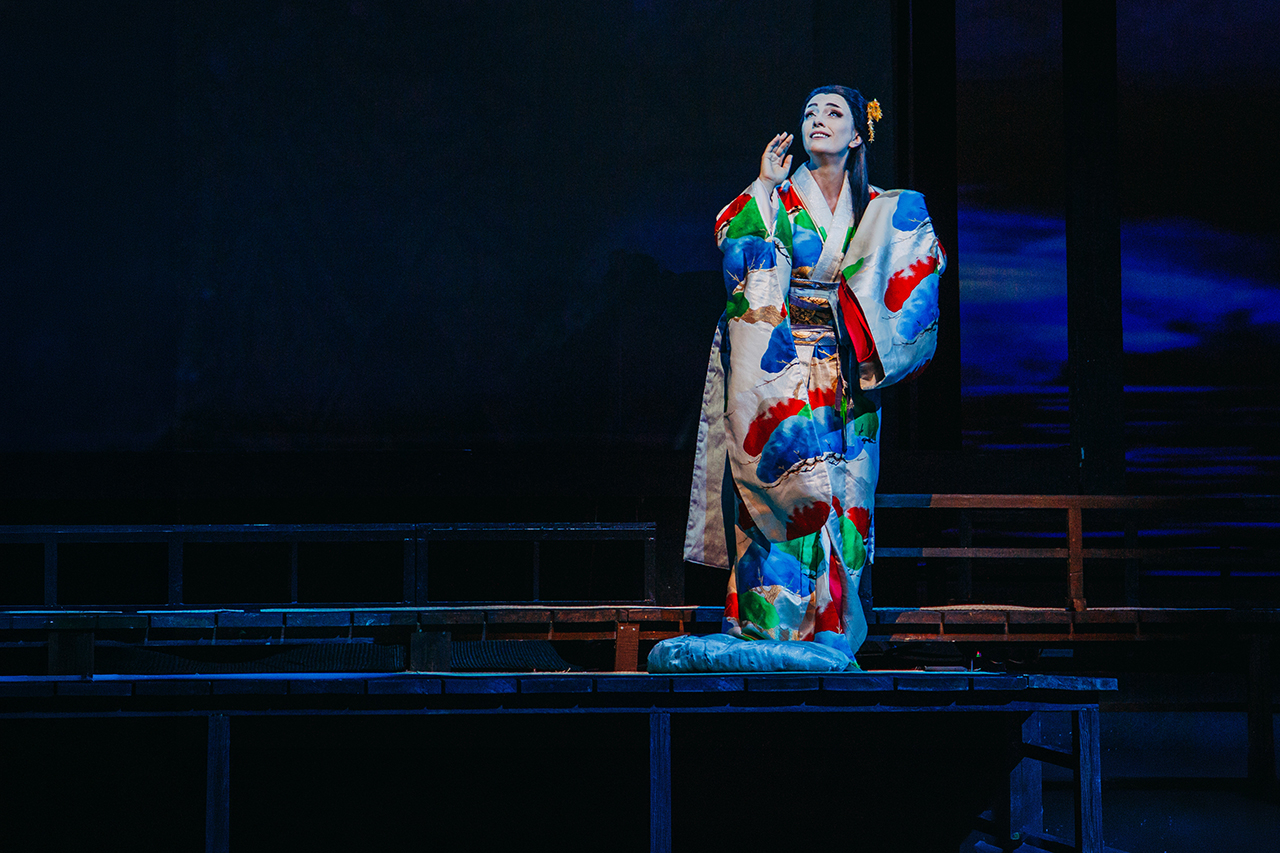
Giacomo Puccini's 'Japanese tragedy', Madama Butterfly, one of the most iconic and timeless works in the operatic repertoire, will return to the Stavros Niarchos Hall for seven performances in June and July 2027. Hugo de Ana's revived staging will bring to the fore one of the GNO's most beloved productions, which began at the Odeon of Herodes Atticus and was then tailored for the Stavros Niarchos Hall. Through stunning projections, minimalist yet symbolic props, and high aesthetic costumes, a visual universe emerges in which traditional Japan engages in a creative conversation with Western modernism, offering a highly atmospheric and aesthetically captivating experience.
From its 1904 debut at La Scala in Milan, which ended in a blatant failure, to Puccini's revised version, presented just a few months later in Brescia, Madama Butterfly evolved into one of opera's greatest achievements. It also marks a significant milestone for the GNO, as it was its first production in 1940, and continues to evoke deep emotion in the audience to this day, more than a century after its creation.
The plot, set in the early 20th century, tells the story of the tragic love between the young geisha Cio-Cio-San, the so-called Butterfly, and American naval officer Benjamin Franklin Pinkerton. To her, their marriage represents a sacred bond and a promise for life; to him, however, it means something else. When Pinkerton returns to the United States, Butterfly faithfully waits for him with their child for three long years. Yet when he returns, he is accompanied by his new American wife, bringing the heroine face-to-face with the harsh truth. After deciding to hand the child over to his father, Cio-Cio-San is driven to an earth-shattering act of self-sacrifice, sealing her destiny with a tragic end.
The staging of this production reconstructs the atmosphere of early-20th-century Japan with subtlety, crafting a poetic setting where Eastern aesthetics meets Western dramaturgy. The costumes and sets, inspired by tradition and theatrical minimalism, underscore the conflict between two worlds-Japanese culture and the American presence-that lies at the heart of the opera. With his distinctive aesthetic, Hugo de Ana develops a directorial style that balances 'big spectacle' with detail in performances, bringing out the characters' psychological nuances. The cast will feature internationally acclaimed protagonists, including Ermonela Jaho, Cellia Costea, Marcelo Puente, Anita Rachvelishvili, and Tassis Christoyannis.