








Lead Donor of the GNO
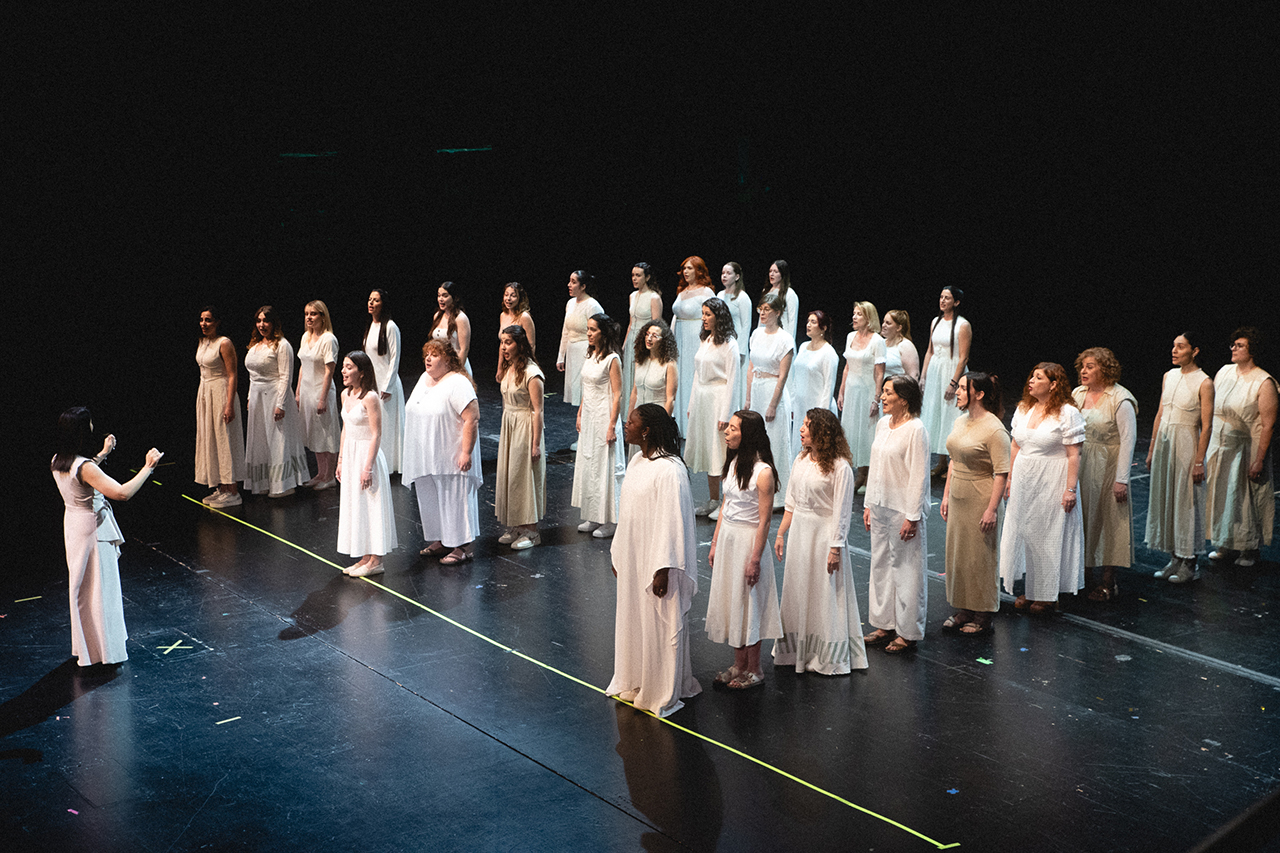
The CHÓRES female choral ensemble and the CHORDAE chamber choir present a unique concert at the Stavros Niarchos Hall of the Greek National Opera, on Wednesday, 1 July 2026, at 20.00. Featuring more than 140 choir members, CHÓRES and CHORDAE propose a multidimensional programme of choral music for equal voices, in which choral adaptations of traditional Greek and international melodies are mixed with new art music arrangements and compositions, many of them written especially for the ensemble by distinguished contemporary composers.
After performances at the GNO Alternative Stage in collaboration with the National Women's Youth Choir of the Netherlands, as part of the 2026 Europe Day in collaboration with the Office of the European Parliament in Greece, at the Temple of Olympian Zeus as part of the international music event JammJam, at the SNF Nostos Festival, the release of the film Songs from the Ionian Sea and in view of their first appearance at the Little Theatre of Ancient Epidaurus as part of the Athens Epidaurus Festival, the CHÓRES female choral ensemble returns to the Stavros Niarchos Hall of the GNO with an eclectic programme mixing the core of their basic repertoire, consisting of arrangement of traditional melodies from Greece and the Balkans, with original works by Greek and international composers for equal voices. With the participation of more than 140 women onstage, CHÓRES approach this diverse repertoire with their characteristic freshness and contemporary aesthetics, highlighting the traditional musical material as well as the special vocal and physical skills of their members.
At the same time, after its successful performance at the international Winter Night of Choirs Festival at the House of Music Hungary in Budapest as well as their recent appearances at the German Evangelical Church in Athens, the up-and-coming female chamber choir CHORDAE performs again next to its 'sister' choir CHÓRES, focusing on works from the romantic and contemporary art music repertoire for equal voices.
The concert programme includes works by composers Alkis Baltas, Yannis Constantinidis, Simela Emmanouilidou, Kharálampos Goyós, Yannis Ioannidis, Aléxandros Kapsokavadis, Zoltán Kodály, Petar Lyondev, Martha Mavroidi, György Orbán, Margarita Papadimitriou, Einojuhani Rautavaara, Robert Schumann, Hristo Todorov, Philippos Tsalahouris, etc. The concert is led by choirmistresses Eirini Patsea, Christina Poupalou and Simela Emmanouilidou, and choreographed by Stavros Alexandros Ikbal, Stefania Sotiropoulou and Avgoustinos Koumoulos. The costumes are supervised by Eirini Petraki and the lighting by Stavros Alexandros Ikbal.
About the CHÓRES female choral ensemble
CHÓRES is an artistic incubator created by Marina Satti in order to cultivate its members' skills in music, dance and acting as well as to develop artists with a broad education and social awareness. CHÓRES experiment on the interconnection of diverse aesthetic and cultural elements, transcending the boundaries of geography or age and utilising various means of expression. More than 150 women aged between 15 and 60 regularly practise the whole spectrum of performance arts. Their eclectic repertoire includes traditional Greek songs, songs from the Balkans and the Eastern Mediterranean, original compositions and folksong arrangements by numerous Greek and international composers, several of which were written expressly for the ensemble. CHÓRES regularly collaborate with the Greek National Opera as a resident ensemble, having taken part in many concerts, theatre productions, social and educational activities, and choral festivals in Greece and abroad.
About the CHORDAE chamber choir
The chamber choir CHORDAE was founded in 2024 under the umbrella of the CHÓRES choral family and has been active ever since under the direction and artistic guidance of choral conductor Eirini Patsea. The ensemble aims to study and perform art music repertoire for equal voices and is comprised of female music students and amateur choristers who are interested in delving into the art choral style, developing their vocal, polyphonic and interpretive skills. Their repertoire ranges from Renaissance polyphony, through the rich choral repertoire of 20th century Central Europe, to contemporary international and Greek composers.