








Lead Donor of the GNO
Production sponsor

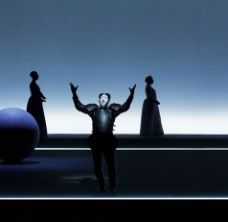
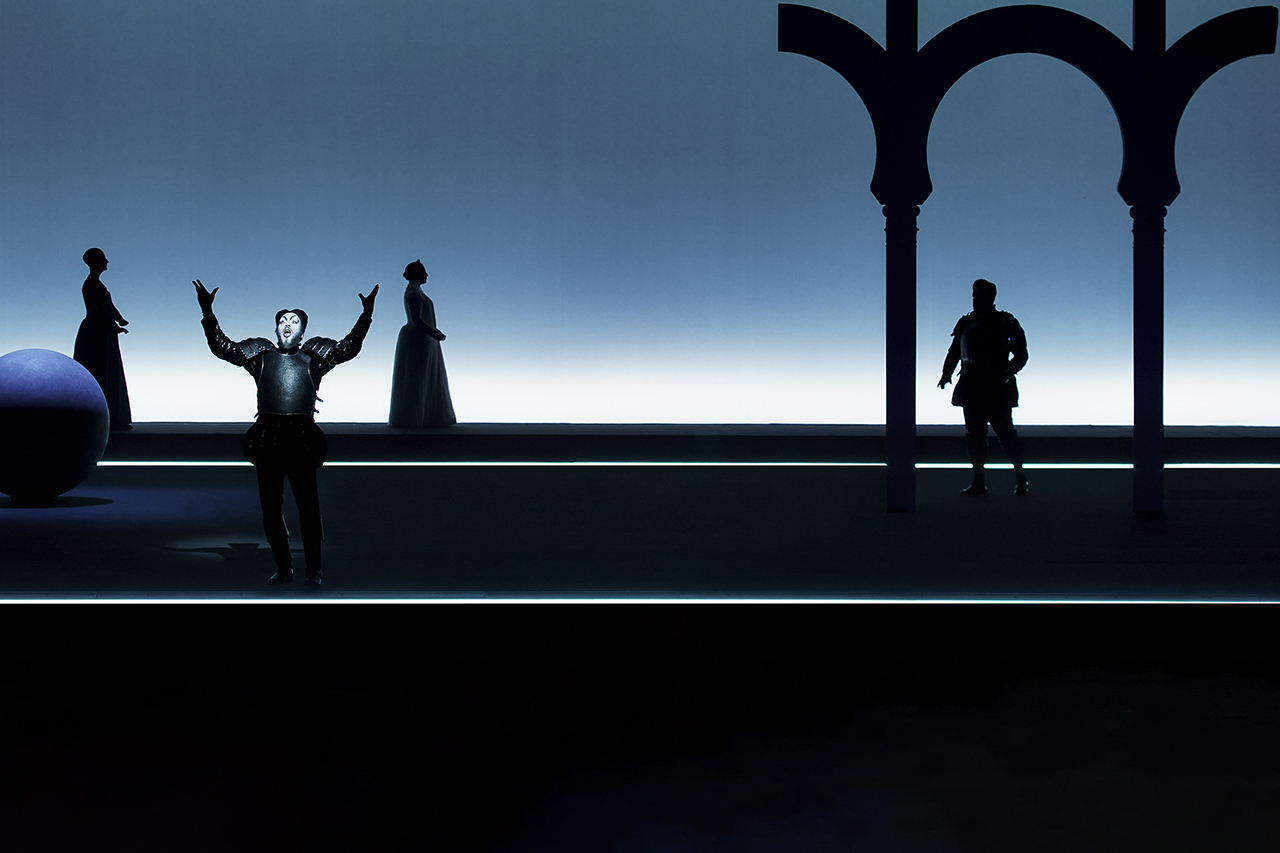
Verdi's Otello in Robert Wilson's unparalleled staging returns to the Greek National Opera in April and May 2027 for eight performances. The revival of this unique production, which premiered at the GNO in 2022 to great acclaim, is an ultimate tribute to the renowned creator, who left a legacy that redefined the language of opera. The opera, based on Shakespeare's masterpiece of the same name, unfolds through a directorial vision of high aesthetic and powerful innerness, bearing the stamp of a great creator who subverts the rules of narration, giving a leading role to light, time, and movement, and creating a stage experience that serves as both a musical and a visual event.
Verdi's masterpiece, which premiered in 1887 at La Scala in Milan, is among the composer's most mature and dramatically condensed works. With an exemplary economy of expressive means, Verdi offers a captivating psychological portrait of the leading figure, capturing his heroism, jealousy, and destruction, while crafting a musical universe in which the characters' external actions and inner worlds are inextricably intertwined.
At the heart of the tragedy, a man who was invincible on the battlefield proves to be defenseless against himself. Otello, torn between love and insecurity, gradually turns from a hero into a victim of an inner storm. Alongside him, Desdemona embodies purity that cannot survive within suspicion, while Iago pulls the strings unseen behind the scenes, like a shadow feeding on human weakness.
In Wilson's interpretation, Otello is a 'foreigner' caught in a constant inner conflict. Through his absolutely distinct style, the stage director gives music precedence, creating images reminiscent of tableaux vivants. As he remarked, a while before the work's premiere in 2019 at the Baden-Baden Easter Festival: 'Otello is dealing with the question: What is it like to be a foreigner? It sure is contemporary, but it is a classical conflict. And one finds these classical conflicts throughout all literature, throughout all history. One can say it is contemporary, but I would rather say it?s full of time. It is not timeless, but full of time. We can go back to the 16th century or to the 19th century or we can be in the 21st century, we still have the same old conflicts.'