








Lead Donor of the GNO
Ballet Sponsor

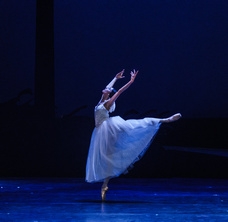
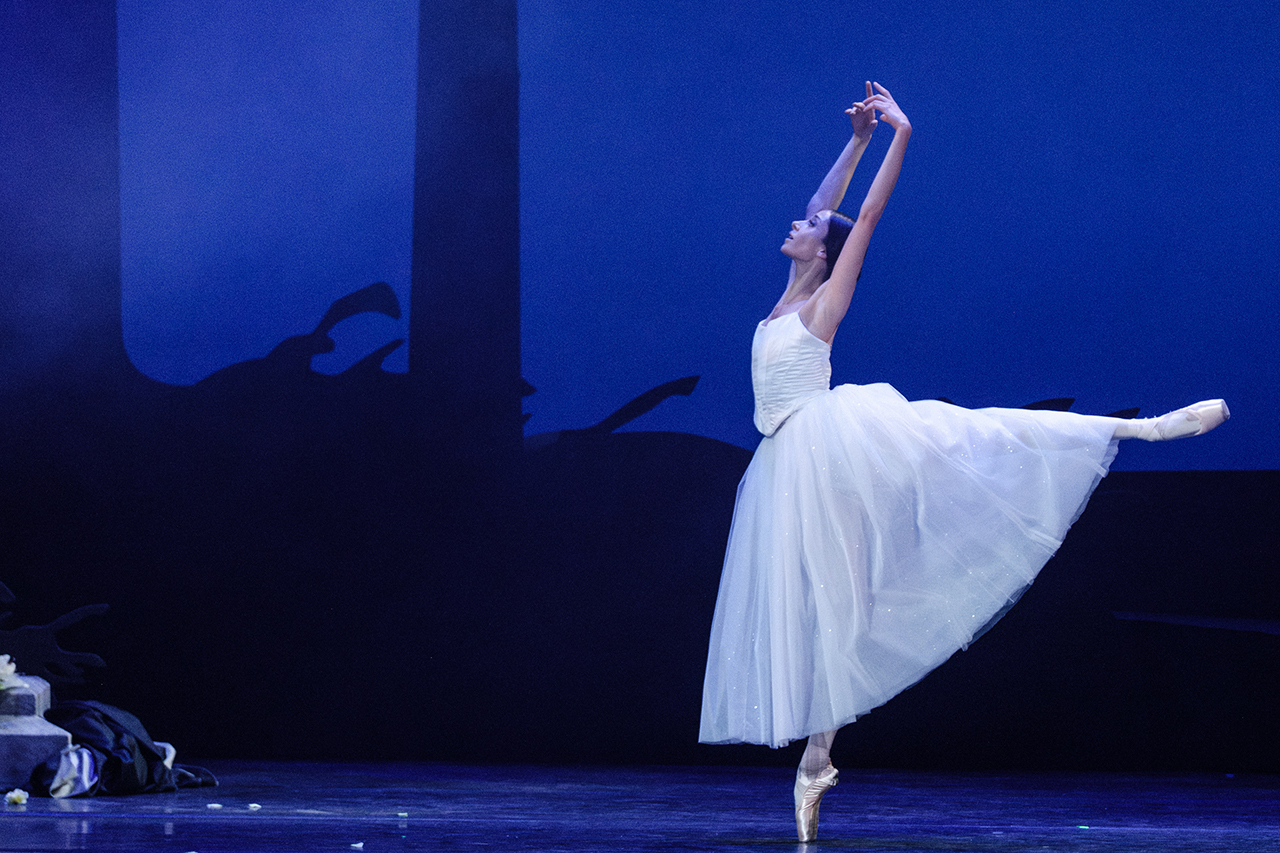
The Greek National Opera Ballet presents, for a second consecutive season, the highly successful production of Giselle, one of the most famous ballets of the Romantic era, set to Adolphe Adam's captivating music. Marius Petipa's renowned choreography is revived by distinguished choreographers Verónica Villar and Elena Iglesias. The production will run from 20 December 2026 to 10 January 2027, with eleven performances in the Stavros Niarchos Hall, conducted by José Salazar and featuring the Orchestra and Ballet of the Greek National Opera alongside international ballet stars.
Historically, Giselle has been one of the most emblematic ballets of all time and a landmark in dance history. The title role, often described as 'the Hamlet of ballet', is one of the ultimate performative challenges for a ballerina. Since its premiere at the Paris Opera on 28 June 1841, starring Carlotta Grisi and Lucien Petipa, Giselle has carved out a long trajectory on the world's most prestigious stages, moving audiences to this day.
The work's choreographic tradition, closely associated with Marius Petipa, retains its liveliness and charm to this day, illuminating, with sensitivity, human weakness, betrayal, loss, and the power of unconditional love that transcends even the limits of death.
Having gradually faded from the Western European repertoire after 1867, Giselle returned to Western stages in 1910, when it was presented by Sergei Diaghilev's Ballets Russes in Paris. At the Greek National Opera, it was first performed in part, with only Act II, in 1982, while its first full-length performance took place on 10 February 1983, with Katerina Dima as Giselle and Angelos Hadjis as Albrecht.
Giselle (full title: Giselle or The Wilis) is a two-act ballet based on a Slavic myth that Théophile Gautier and Jules-Henri Vernoy de Saint-Georges, the authors of its scenario, first encountered in an essay by Heinrich Heine. At the work's first performance, pantomime scenes made up most of the action, as the pointe technique was still in its embryonic stage. Over time, many of these scenes were replaced by dance sequences, bringing changes to the score through cuts, abridgements, and rearrangements of the separate parts. Along with La Sylphide (1832), Giselle ranks among the earliest ballets in which dancers abandoned the traditional long skirts and replaced them with garments that left their calves bare.
Giselle features music by Adolphe Adam (1803-1856), a French composer who, despite his rich operatic output-including 39 operas-, established his reputation primarily through his ballet compositions. In the revised choreography, Marius Petipa assigned Austrian composer Leon Minkus to compose a pas de deux for Giselle and Albrecht, which was added to Act I. In this production's choreography, the ballet's score includes additional compositions by Friedrich Burgmüller and uses Boris Asafyev's musical edition for the final scene.
The work's plot unfolds in two acts. At its core lies the tragic story of a young peasant girl who falls in love with Count Albrecht, unaware of his true identity. Disguised as a plain villager, he wins her love yet conceals that he has already been betrothed to another woman. When the truth comes out, Giselle cannot bear the betrayal and, having lost her sanity, she dies. The story then moves to a dark forest, where, in the moonlight, the Wilis, the ghosts of young women betrayed by their beloved before their wedding and transformed into elves, appear. All men they encounter are doomed to be swept away in a non-stop dance to death. Repentant Albrecht is one of those men. Seeking Giselle's tomb, he falls prey to the Wilis' vengeful dance. However, Giselle returns from the world of the dead and, using the power of her love, intervenes to protect him, keeping him from death until dawn, when the spirits' power fades. Despite the betrayal she suffered, she forgives him and saves him, letting him continue his life in her memory before she returns to the shadow world.
Giselle is a deeply poetic story about love, betrayal, loss, and forgiveness, in which love proves even more powerful than death. The contrast between the earthly, realistic world of Act I and the otherworldly, ethereal atmosphere of Act II highlights the work's dual nature, balancing human drama with the metaphysical.
Marius Petipa's iconic choreography is revived by Verónica Villar and Elena Iglesias. Petipa presented his own version in 1884 with the Imperial Ballet of Saint Petersburg, based on the choreography of Jean Coralli, a French choreographer of Italian descent. In the original production, the choreographic sequences for the female lead were assigned to Jules Perrot, who was at the time romantically involved with the first performer in the role of Giselle, Carlotta Grisi.
Verónica Villar and Elena Iglesias, both established dancers and dance teachers, have collaborated with leading theatre and dance schools across Europe. Villar has served as Principal Dancer with the Ballet of the Pays Basque and, since 2013, she has worked as a teacher and co-director of rehearsals at the Karlsruhe State Theatre. Iglesias, a graduate of the Madrid Royal Dance Conservatory (Real Conservatorio de Danza de Madrid), has served as director and dance teacher at the Palatinate Theatre in Kaiserslautern, Germany.
The GNO Orchestra will be conducted by José Salazar, a graduate of the Los Angeles Philharmonic's Dudamel Fellowship programme. Salazar served as artistic director and maestro of El Sistema Greece (2018-2023) and has collaborated with the Royal Ballet as a member of the 'Jette Parker' Artists programme at the Royal Opera House in London. He has conducted orchestras in Europe and the USA. He first collaborated with the GNO on Giselle during the 2025/26 season.
The sets and costumes are designed by Dido Gogkou, a set and costume designer and visual artist with an active presence in both Greek and international theatre. As she notes, 'the sets for Giselle present a modern visual approach, inspired by 16th-century means and techniques, the Renaissance, and today's visual applications. The costumes offer a modern presentation of historical costumes from the 16th and 17th centuries, portraying the textures, lines, and design of the past in today's world.' The lighting design was created by Eleftheria Deko, an internationally distinguished designer and Emmy Award winner for her lighting design for the 2004 Athens Olympics Opening Ceremony.
In this highly technically and artistically demanding ballet, the stage will be shared by exceptional GNO Ballet dancers and internationally acclaimed guest dancers.
For the role of Giselle, we have selected a cast of distinguished, world-class ballerinas. These include Elisabeth Tonev (20, 26 Dec.), Maia Makhateli (22, 24 Dec.), and Ksenia Ovsyanick (31 Dec. / 2, 3, 10 Jan.), who will return to the title role this year following their exceptional performances in the previous GNO season, as well as Riho Sakamoto (7, 8, 9 Jan.), who will make her debut in the production. Elisabeth Tonev, a Principal Dancer with the Bavarian State Ballet and winner of the prestigious Konstanze Vernon Prize, has performed major roles from the classical and modern repertoires, collaborating with leading choreographers. Georgian ballerina Maia Makhateli, a Principal Dancer with the Dutch National Ballet, is returning to the GNO after performing in Giselle in 2025/26 and delivering an exquisite performance in Don Quixote in 2022. Enjoying an international career, she has distinguished herself in leading roles in the classical repertoire and has been honoured with the Dance Europe award for 'Dancer of the year'. Ksenia Ovsyanick, a British-Belarussian Principal Dancer with the Berlin State Ballet, began her career with the English National Ballet and has performed leading roles in major works from the classical and contemporary repertoires. She has also received prestigious honours, including the Dance Open International Ballet Award and the Premio Eccellenze della Danza. Riho Sakamoto, a Principal Dancer with the Dutch National Ballet since 2021, has carved out a significant international career, winning a gold medal at the Youth America Grand Prix (2010) and receiving several Dance Europe awards for her performances in works from the modern repertoire.
Count Albrecht will be portrayed by Victor Caixeta (20, 26 Dec.), Young Gyu Choi (22, 24 Dec.), Alejandro Virelles (31 Dec. / 2, 3, 9, 10 Jan.), and David Motta Soares (7, 8 Jan.). Victor Caixeta is a Principal Dancer with the Vienna State Ballet. He has collaborated with major institutions, including the Mariinsky Ballet in Saint Petersburg and the Dutch National Ballet. Young Gyu Choi, who has also performed Albrecht in the 2025/26 GNO season, is a Principal Dancer with the Dutch National Ballet. He has been honoured with the Alexandra Radius Prize (2017) and has stood out in leading roles across the classical and modern repertoires. The distinguished Alejandro Virelles is a Principal Dancer with an international career, having collaborated with prestigious companies, such as the Cuban National Ballet, the English National Ballet, the Bavarian State Ballet, and the Berlin State Ballet. He has received important honours at international dance competitions. David Motta Soares is a Principal Dancer with the Berlin State Ballet. Having graduated from the Bolshoi Ballet Academy, he began his career as a lead soloist at the Bolshoi Theatre in Moscow.
Hilarion will be portrayed by the GNO Ballet Principal Dancers Vangelis Bikos (20, 26 Dec. / 2, 8, 10 Jan.) and Danilo Zeka (22, 24 Dec. / 7 Jan.) as well as by Yorgos Hatzopoulos (31 Dec. / 3, 9 Jan.) from the GNO Corps de ballet.
Performing as Myrtha will be Carollina Bastos (20, 26, 31 Dec. / 2, 3 Jan.)-a Soloist with the Bavarian State Ballet, distinguished at prestigious international ballet competitions; Leticia Dias (22, 24 Dec.)-a Principal Dancer with the Royal Ballet in London, with a remarkable presence in leading roles across the classical and modern repertoires; and Olga Markari (7, 8, 9, 10 Jan.), who also portrayed this role in the previous season (2025/26).
Featuring the Orchestra, Principal Dancers, Soloists, Demi-Soloists, the Corps de ballet, and students from the Greek National Opera Professional Dance School.