








Lead Donor of the GNO
Giacomo Puccini's Tosca, one of the most fascinating and popular works in the operatic repertoire, returns to the Greek National Opera in an emblematic production featuring stage direction and set and costume designs by Nikos S. Petropoulos.
This operatic thriller, in which love, power, and violence blend, is an overwhelming journey into tragedy. From its premiere in Rome in 1900 to the present, Tosca has continued to mesmerise audiences with its fast-paced action and the dramatic tension of Puccini's music.
At the work's core stands Floria Tosca, a woman who loves with total intensity and chooses to confront power, fear, and her own fate. Her love for Cavaradossi becomes a battlefield as the world around her collapses under the pressure of the ruthless chief of police, Scarpia, who seeks to dissolve all sense of morality, driving Tosca to an act of violence born of the need for freedom and the restoration of dignity. Tosca is a story unfolding through a relentless game of salvation and disaster, in which the heroine's redemption proves to be an illusion, leading her to a dead end with no room for escape.
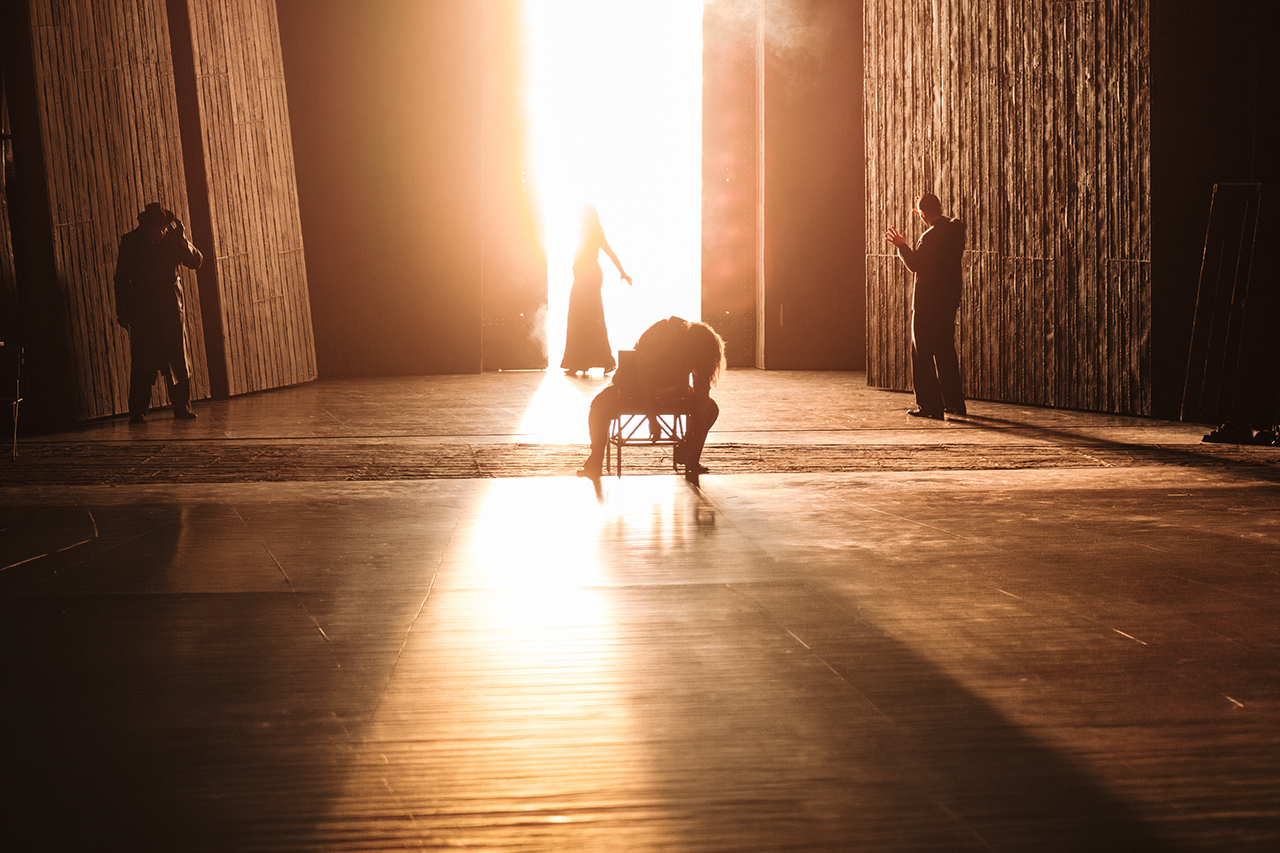
The production of Tosca, staged by Nikos S. Petropoulos, had its Greek premiere at the Olympia Theatre in 2007, following an invitation from the then artistic director of the Greek National Opera, Stefanos Lazaridis. By shifting the action to the years of World War II, Nikos S. Petropoulos' directorial vision lends the work a dark, almost cinematic pulse, creating a world steeped in fear, betrayal, and silent threats. The production's black-and-white aesthetic, stark contrasts between light and shadow, and evocative atmosphere are reminiscent of film noir, in which violence and sadism manifest with ruthless realism. In constant dialogue with the onstage action, Puccini's music walks a fine line between underlying, menacing tensions and explosive, heart-wrenching climaxes, following the heroes at every step and revealing their darkest and most vulnerable aspects. As the director notes: 'In February 1944, in a Rome that seems like a travesty of a Città aperta, overrun with refugees, spies, double agents, informers, collaborators of the Germans, traitors, torturers, and fugitives, amidst the barrage of Allied bombings, the constant movement of German troops, and widespread panic, Tosca weaves a perfect thread to lead us into a 20th-century realist historical drama.'
The production features internationally acclaimed performers, including El?na Garanča (debut), Sonya Yoncheva, Cellia Costea, Charles Castronovo, Arturo Chacón-Cruz, Riccardo Massi, Dimitri Platanias, Dionysios Sourbis, etc.