


PARNASSOS LITERARY SOCIETY
2nd Athens International Music Festival
Pinchas Zukerman returns to Athens
3 - 7 November 2026
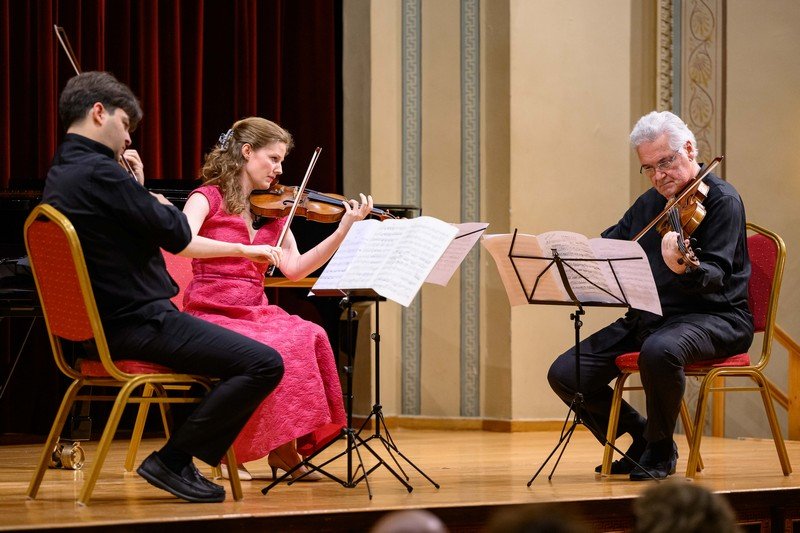
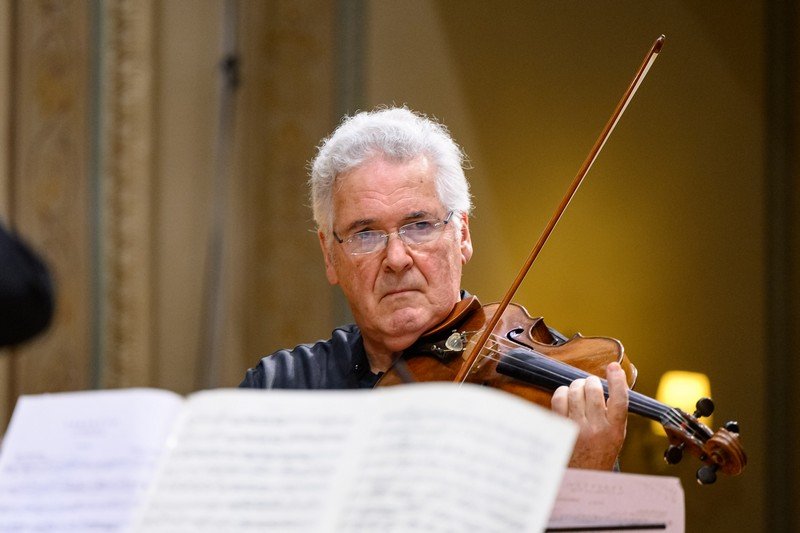
Athens welcomes one of the most important violinists of our time, the legendary Pinchas Zukerman, who opens the Athens International Music Festival - an event that brings together brilliant musicians from around the world, transforming the historic Parnassos Literary Society into the centre of international musical creativity for five days, presenting masterpieces of chamber music.
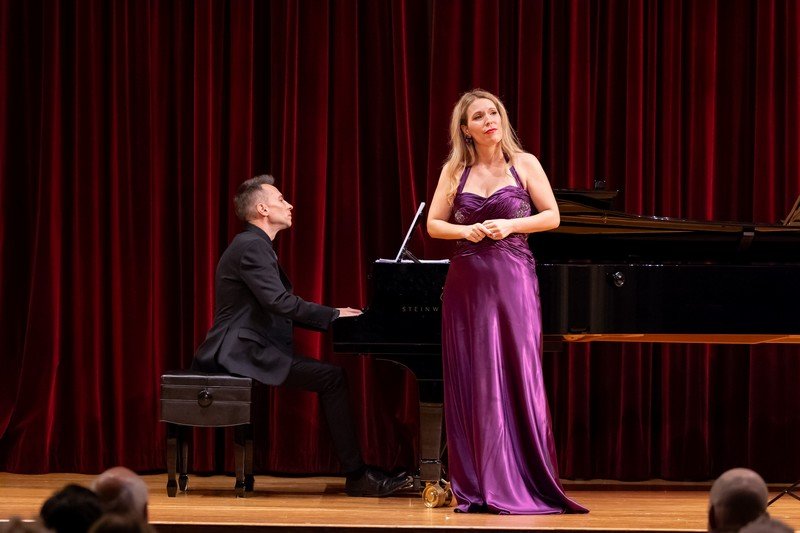
This year's edition features internationally renowned artists such as soprano Christina Poulitsi, Asi Matathias and Tosca Opdam (violin), Alexander Hülshoff and Gabriel Schwabe (cello), Spyros Mourikis (clarinet), Ori Kam (viola), as well as pianists Nefeli Mousoura, David Kadouch and Victor Stanislavsky.
Under the artistic direction of Tosca Opdam and Asi Matathias and organised by Spyros Terzis, the Festival highlights music as a bridge between cultures, combining high artistic quality with educational activities and opportunities for young musicians.
As part of the Festival, three violin Masterclasses will be given by Pinchas Zukerman, Tosca Opdam and Asi Matathias for 5 outstanding young musicians, where the audience will have the opportunity to watch this unique teaching experience live. In parallel, a free pilot educational programme will be held in schools and educational institutions in Athens, as well as for the students of the conservatory of the Kalogeropouleio Foundation of Arts and Culture in Corinth, strengthening the social impact of the Festival.
3 November 2026
Talk: To be announced
Concert Title: Between Two Worlds
The opening concert sets in motion the central theme of this year's festival: music as a dialogue between places, generations and people. Mozart's Duo for Violin and Viola, K. 424, was written in 1783 as a helping hand to Michael Haydn, who was unable to deliver on time a commission of six duos for the Archbishop of Salzburg; Mozart anonymously composed two of them, rescuing his colleague.
It is followed by Sibelius's youthful "Lovisa" Trio, written in 1888 at the age of 23 and named after the town where his family spent their summers - a work that remained unpublished for more than a century.
The evening culminates in Brahms's Second String Quintet, Op. 111: he composed it in 1890 as a definitive farewell to composition - a decision he ultimately did not keep - and its premiere in Vienna proved a triumph. From Mozart's gesture of friendship to Brahms's unkept farewell, the evening reveals, in a striking way, how closely seemingly distant musical worlds are, in the end, connected.
Pinchas Zukerman (viola) & Asi Matathias (violin)
I. Adagio - Allegro
II. Andante con variazioni
III. Menuetto: Allegretto
IV. Rondeau: Allegro
Sibelius - Piano Trio in C major, "Lovisa"
Tosca Opdam (violin) & Gabriel Schwabe (cello) & Victor Stanislavsky (piano)
I. Allegro
II. Andantino
III. Vivacissimo
Brahms - String Quintet No. 2 in G major, Op. 111
Asi Matathias (violin) & Tosca Opdam (violin) & Ori Kam (viola) & Alexander Hülshoff (cello) & Pinchas Zukerman (viola)
I. Allegro non troppo, ma con brio
II. Adagio
III. Un poco Allegretto
IV. Vivace, ma non troppo
4 November 2026
Talk: To be announced
Concert Title: The Poet and the Muse
This concert explores the meeting point between music, theatre and poetry. Poulenc's music for Anouilh's play L'Invitation au château brings the spirit of French theatre into the concert hall, with a tango of French finesse among its best-known pages.
It is followed by a world premiere: Delphi and Dionysus by the American composer Todd Mason. The work is inspired by the eternal struggle between order and chaos - Apollo, god of harmony, and Dionysus, god of ecstasy, who according to Greek mythology succeed one another at the sanctuary of Delphi every winter.
Saint-Saëns's Trio La Muse et le Poète (The Muse and the Poet), Op. 132, was written in 1909 for violin, cello and piano and was first performed with the composer himself at the piano, alongside the legendary Eugène Ysaÿe and Joseph Hollmann.
The evening closes with Brahms's First Piano Quartet in G minor, Op. 25, first presented in Hamburg in 1861 with Clara Schumann at the piano; its finale, the "Rondo alla zingarese", remains one of the most technically demanding passages in the composer's entire chamber music output.
From Anouilh's theatrical verse to the Delphic myth, the evening shows how deeply chamber music can converse with poetry and storytelling.
Poulenc - L'Invitation au château
Tosca Opdam (violin) & Spyros Mourikis (clarinet)
Mason - World Premiere
Victor Stanislavsky (piano) & Spyros Mourikis (clarinet) & Gabriel Schwabe (cello)
Saint-Saëns - La Muse et le Poète, Piano Trio, Op. 132
Asi Matathias (violin) & Gabriel Schwabe (cello) & David Kadouch (piano)
Brahms - Piano Quartet No. 1 in G minor, Op. 25
I. Allegro
II. Intermezzo: Allegro ma non troppo
III. Andante con moto
IV. Rondo alla zingarese: Presto
Pinchas Zukerman (violin) & Ori Kam (viola) & Alexander Hülshoff (cello) & David Kadouch (piano)
5 November 2026
Talk: To be announced
Concert Title: Between Earth and Heaven
Mozart's Clarinet Quintet, K. 581, was written in 1789 for his close friend, the clarinettist Anton Stadler, to whom the composer had already dedicated the "Kegelstatt" Trio in 1786; originally written for Stadler's deeper basset clarinet, it opens the evening with a luminous, almost weightless sound world.
It is followed by Schubert's unfinished String Trio, D. 471, written in September 1816, when the composer was just 19 years old.
The evening concludes with Tchaikovsky's Piano Trio, Op. 50. The composer himself had once declared that he could not bear "the combination of piano with violin or cello"; nevertheless, in 1882, in memory of his friend Nikolai Rubinstein, he overcame his own resistance and wrote one of the most moving works in the repertoire, moving between lyrical remembrance, variation and mourning.
Together, the three works explore the space between earthly experience and something beyond it.
Mozart - Clarinet Quintet in A major, K. 581
I. Allegro
II. Larghetto
III. Menuetto - Trio I - Trio II
IV. Allegretto con variazioni
Tosca Opdam (violin) & Asi Matathias (violin) & Ori Kam (viola) & Gabriel Schwabe (cello) & Spyros Mourikis (clarinet)
Schubert - String Trio in B-flat major, D. 471
I. Allegro
Pinchas Zukerman (violin) & Ori Kam (viola) & Alexander Hülshoff (cello)
Tchaikovsky - Piano Trio in A minor, Op. 50
I. Pezzo elegiaco: Moderato assai - Allegro giusto
II. Tema con variazioni
Asi Matathias (violin) & Victor Stanislavsky (piano) & Alexander Hülshoff (cello)
6 November 2026
Talk: To be announced
Concert Title: French Impressions
The evening is devoted to the distinctive elegance, colour and intimacy of French music.
Fauré's Dolly Suite, Op. 56, was written gradually between 1894 and 1897 as a series of birthday gifts for Hélène "Dolly" Bardac, daughter of Emma Bardac, with whom the composer had a long-standing relationship; it reveals a rare, tender side of the composer.
Next come three emblematic scenes from French opera: "Depuis le jour" from Charpentier's Louise, in which the heroine sings of the happiness of her new life in Montmartre; Ophelia's mad scene, "À vos jeux, mes amis", from Ambroise Thomas's Hamlet, shortly before she drowns; and the poison aria, "Amour, ranime mon courage", from Gounod's Roméo et Juliette, in which Juliet finds the courage to drink the potion that will save her - three female voices, three moments of ecstasy, madness and daring.
The programme concludes with Fauré's First Piano Quartet in C minor, Op. 15: begun in 1876, during his engagement to Marianne Viardot, which was broken off a few months later, it was completed in 1879 and premiered in 1880; the composer revised it radically in 1883, writing the finale anew. Despite its melancholy origins, the work maintains a noble, restrained mood, without a trace of self-pity. From the miniature of childhood joy to dramatic opera, and from there to the chamber music masterpiece, the evening celebrates the breadth and intensity that the French musical tradition can hold.
Fauré - Dolly Suite, Op. 56
David Kadouch (piano) & Nefeli Mousoura (piano)
Selection of French Songs
Christina Poulitsi (soprano) & Nefeli Mousoura (piano)
Fauré - Piano Quartet No. 1 in C minor, Op. 15
I. Allegro molto moderato
II. Scherzo: Allegro vivo
III. Adagio
IV. Allegro molto
Tosca Opdam (violin) & David Kadouch (piano) & Ori Kam (viola) & Gabriel Schwabe (cello)
7 November 2026
Talk: To be announced
Concert Title: Transfiguration
The festival closes with a programme devoted to transformation.
Amanda Maier's Sonata in B minor for Violin and Piano brings the voice of a composer who, in 1873, became the first woman to be awarded the title of Musikdirektör by the Royal Swedish Academy of Music; her brilliant career as a violinist and composer was curtailed after her marriage in 1880, and so her music has only begun to receive the recognition it deserves in recent decades.
It is followed by Verklärte Nacht ("Transfigured Night"), Op. 4, which the then 25-year-old Schönberg wrote in 1899, inspired by Richard Dehmel's poem about two lovers walking through a moonlit forest; the work was initially rejected by the Vienna Music Society, partly because of an "unorthodox" chord and partly because of the daring content of the poem, and it stands today on the threshold between late Romanticism and modernism.
The evening - and the festival - concludes with Schubert's String Quintet in C major, D. 956, written just a few months before his death in 1828. The unusual choice of two cellos instead of a second viola gives the work a deeper, darker colour; it is regarded today as one of the greatest chamber works ever written - so beloved that Arthur Rubinstein asked for it to be played at his funeral.
Together, Maier, Schönberg and Schubert create a final resonance across generations: music that is inherited, transformed and, ultimately, renewed.
Amanda Maier - Sonata in B minor for Violin and Piano
I. Allegro
II. Andante
III. Allegro
Tosca Opdam (violin) & Victor Stanislavsky (piano)
Schönberg - Verklärte Nacht, Op. 4
Asi Matathias (violin) & Gabriel Schwabe (cello) & Victor Stanislavsky (piano)
Schubert - String Quintet in C major, D. 956
I. Allegro ma non troppo
II. Adagio
III. Scherzo: Presto - Trio: Andante sostenuto
IV. Allegretto
PARNASSOS LITERARY SOCIETY
8 Agiou Georgiou Karytsi Square, Athens
(Map)
DATES
3-7 November 2026
STARTING TIME
20:30
TICKET PRICES
Premium (1-2) €60
Zone A (3-5) €45
Zone B (6-10) €25
Zone C €15/€10*
Balcony €15/€10*
* reduced price for persons over 65, school pupils & university students with a valid student ID
ADVANCE SALES
TICKET SERVICES
- online: www.ticketservices.gr
- by phone: 2107234567
- box office: 39 Panepistimiou Street, Athens
Telephone and online purchases are subject to a service fee of
6% of the ticket price
E-TICKET
Tickets purchased online are received in PDF format and can be printed
or saved on a mobile phone
TERMS & CONDITIONS
click here
PRODUCTION DETAILS
ΔΙΕΘΝΕΣ ΦΕΣΤΙΒΑΛ ΜΟΥΣΙΚΗΣ ΑΘΗΝΩΝ AMKE
ΑΦΜ: 803376791
ΔΟΥ: ΚΕΦΟΔΕ Αττικής
ΕΔΡΑ: Κηφισίας 124 Αθήνα 11526

TICKET SERVICES - LOGISMIKI LTD
Call center: +30 210 7234567
e-mail: info@ticketservices.gr
Box office: 39, Panepistimiou Str. (Pesmazoglou Arc), Athens, Greece 
Working hours: Mon-Fri: 9am-5pm