








Lead Donor of the GNO
Production sponsor

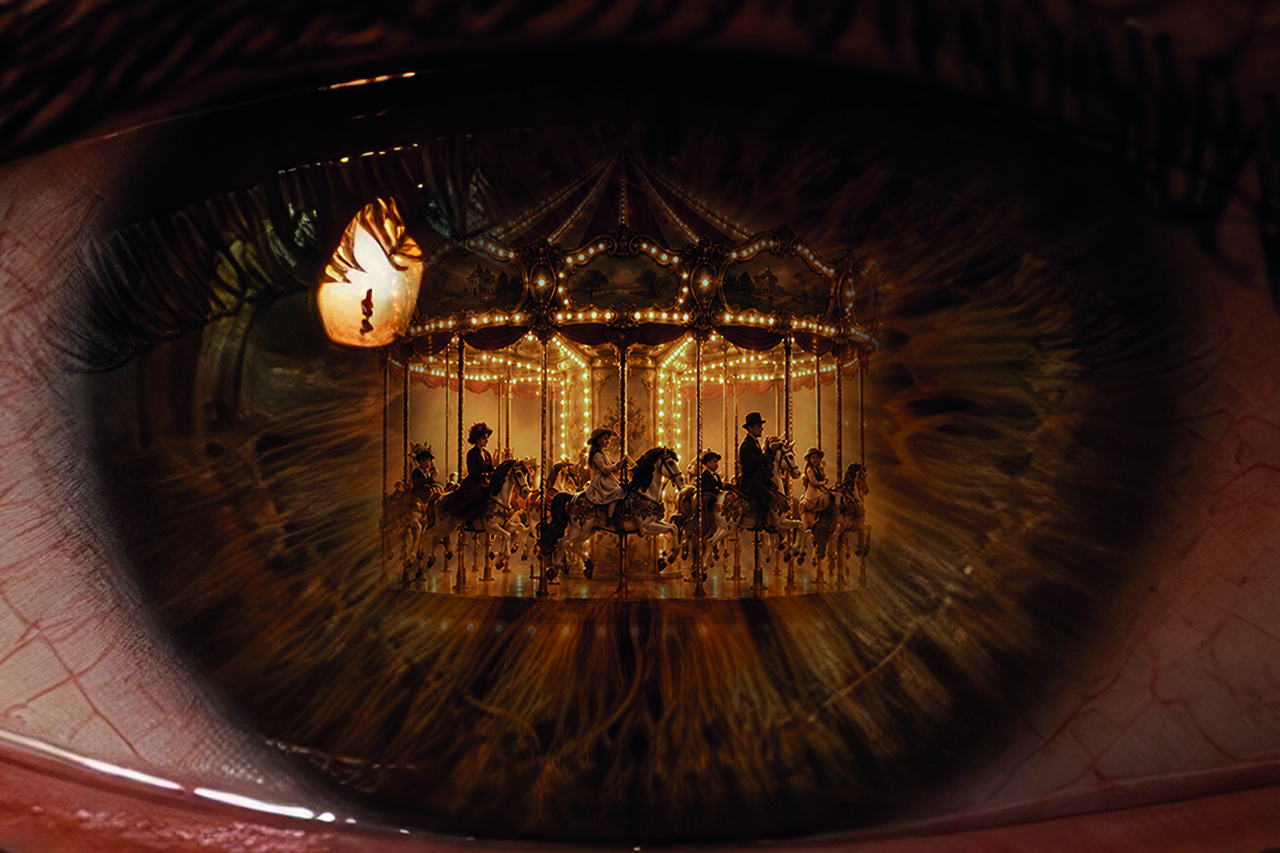
Pyotr Ilyich Tchaikovsky's opera The Queen of Spades marks a significant return to the Greek National Opera's repertoire, 63 years after its debut at the GNO. This late-Romantic masterpiece will be staged at the Stavros Niarchos Hall from 6 December 2026 for eight performances in a new large-scale production conducted by the distinguished Russian conductor Dmitri Jurowski and directed by the internationally acclaimed British director Stephen Langridge.
Pyotr Ilyich Tchaikovsky's dark and riveting opera The Queen of Spades marks a milestone in the Russian operatic repertoire. It transports us to a dark world, where love and ambition blend with an obsession with controlling one's own destiny. The composer completed the work in 1890 and premiered it at the Mariinsky Theatre in St Petersburg that same year. The Greek National Opera first staged it on 15 February 1963 at the Olympia Theatre.
The libretto, penned by the composer's brother, Modest Tchaikovsky, is based on Alexander Pushkin's novella of the same name. Tchaikovsky, however, did not just adapt the literary story for the stage; he enhanced the characters' psychological depth and placed particular emphasis on Hermann and Lisa's romance. At the same time, he moved the action to St Petersburg under Catherine the Great in the late 18th century, creating an environment where aristocratic glamour and social conventions co-exist with gambling, secret desires, and dark forces.
The story revolves around Hermann, a young officer in love with Lisa, the granddaughter of an elderly Countess and Prince Yeletsky's fiancée. When Hermann finds out that the Countess knows the secret of the three cards that guarantee a win at the game, his desire to change his life and win Lisa's heart gradually turns into a fixation. According to legend, the Countess has revealed the secret to two men, while a prophecy foretells that a third will try to extract it from her, leading to her death. Determined to learn the secret, Hermann sneaks into her room and begs her to reveal it. But when he threatens her, she dies of fright. Later, the Countess' ghost appears before him and reveals the three cards. Guilt and this supernatural encounter intensify his obsession, blurring the line between reality and illusion. Lisa tries to keep him close, but he has already surrendered to his invincible need to test the secret and beat fortune. His obsession will prove fatal for both of them.
In The Queen of Spades, Tchaikovsky maximises the blend of his musical imagination and compositional dexterity, developing a musical dramaturgy that transcends the hitherto limits of operatic writing. Through rich orchestrational textures, stark sonic contrasts, and melodies of high expressive force, the composer follows the inner shifts of his heroes and turns their psychological conflicts into musical action. Particularly imaginative is the link between Hermann's two passions: his love for Lisa and his obsession with the three cards-musical ideas first associated with his erotic desire later return in transformed form, heralding his gradual surrender to gambling. A special place in the work is occupied by the figure of the Countess, who connects two different worlds, the glamorous time of her youth and the story's present. Musical references to the 18th century, including an aria by French composer André Grétry, not only serve as historical flashbacks but also evoke an entire era through the heroine's memories. The past, thus, invades the present, acquiring an almost tangible presence and enhancing the work's mystical atmosphere. The Queen of Spades thus becomes a fascinating psychological and musical drama, in which one's effort to tame one's fate can prove to be one's most destructive delusion.
The direction bears the stamp of Stephen Langridge, the internationally acclaimed British director and, since 2019, the artistic director of the Glyndebourne Festival, a familiar face to GNO audiences. At the Greek National Opera, he has staged Gluck's Orfeo ed Euridice, Bizet's Carmen, and Verdi's Falstaff, among other works. His international career includes collaborations with leading opera houses and festivals, including the Royal Opera House in London, the Lyric Opera of Chicago, the Royal Swedish Opera in Stockholm, the Gothenburg Opera, Opera di Roma, Malmö Opera, Tokyo Opera, the Salzburg Festival, and the Bregenz Festival.
Stephen Langridge's directorial approach highlights the inherent crack between the protagonists' outer and inner worlds. As he characteristically notes, 'our production is set in the flamboyant, reckless court of Catherine the Great-a world fuelled by gambling, drink and restless desire- where a young aristocratic woman strains against the suffocating role she has been given, and an impoverished officer risks everything to seize a place among those who exclude him. Desperate in different ways, Lisa and Hermann hurl themselves at one another, each grasping for escape, meaning, or transformation-but their collision only tightens the trap around them. Their fate turns on a third: the Countess-a decaying relic of a vanished age, rumoured to possess a secret that promises fortune and power, but destroys those who pursue it. Tchaikovsky explores the borderlands where passion tips into obsession, the rational world fractures, and the occult leaks into and distorts all semblance of reality.'
The creative team comprises Katie Davenport, who designed the stunning sets and costumes; award-winning English lighting designer Peter Mumford, who created the lighting design; and Dan O'Neill, who is responsible for the movement.
The production will be led by renowned conductor Dmitri Jurowski, a member of the well-known Russian musical family with an international career and more than a hundred opera productions to his credit. He has conducted at the world's most prestigious opera houses, including the Bavarian State Opera, the Paris Opera, the Royal Opera House in London, and the Bolshoi Theatre. His repertoire centres on works by Tchaikovsky, Mussorgsky, Shostakovich, Prokofiev, Wagner, and Richard Strauss, with a particular focus on the Russian operatic tradition. The Chorus has been prepared by Agathangelos Georgakatos and the Children's Chorus by Konstantina Pitsiakou.
For The Queen of Spades, the Greek National Opera has secured an exceptional cast of acclaimed Greek and international protagonists. The role of Hermann will be performed by the world-renowned Russian tenor Dmitry Golovnin, who has carved out an international career at leading opera houses, including the Vienna State Opera, La Scala in Milan, the Berlin State Opera, Liceu in Barcelona, Teatro Real in Madrid, and the Bolshoi Theatre. A distinguished performer of the Russian repertoire, he has already sung Hermann to great acclaim in Vienna, Brussels, Lyon, and St Petersburg.
Lisa will be portrayed by Anna Stylianaki, a celebrated Greek soprano of the younger generation, who has taken on major roles in her repertoire, including Mim? (La bohème), Fiordiligi (Cos? fan tutte), Countess Almaviva (Le nozze di Figaro), and Micaëla (Carmen).
The Countess will be portrayed by Danish mezzo-soprano Matilde Wallevik, who has performed at the Royal Opera House in London, the Tyrolean State Theatre in Innsbruck, the Spoleto Opera Festival, and other venues. Her repertoire includes such roles as Carmen, Ulrica (Un ballo in maschera), Fricka (Die Walküre), and Eboli (Don Carlos).
Acclaimed baritone Tassis Christoyannis will perform as Prince Yeletsky, following his recent debut as Creonte in the production of Cherubini's Medea in Epidaurus.
The dual role of Count Tomsky / Zlatogor will be portrayed by acclaimed Greek National Opera (GNO) bass Tassos Apostolou, who has carved out a distinguished career across opera, theatre, and cinema both in Greece and at leading international opera houses.
The dual role of Polina / Milovzor will be taken on by mezzo-soprano Chrysanthi Spitadi, who has built an international career in theatres in Germany and Switzerland and has a significant trajectory at the GNO.
Also starring are Andreas Karaoulis, Yanni Yannissis, Eleftherios Kalpaktsidis, Maxim Klonovskiy, Anastasia Kotsali, and Miranda Makrynioti.